
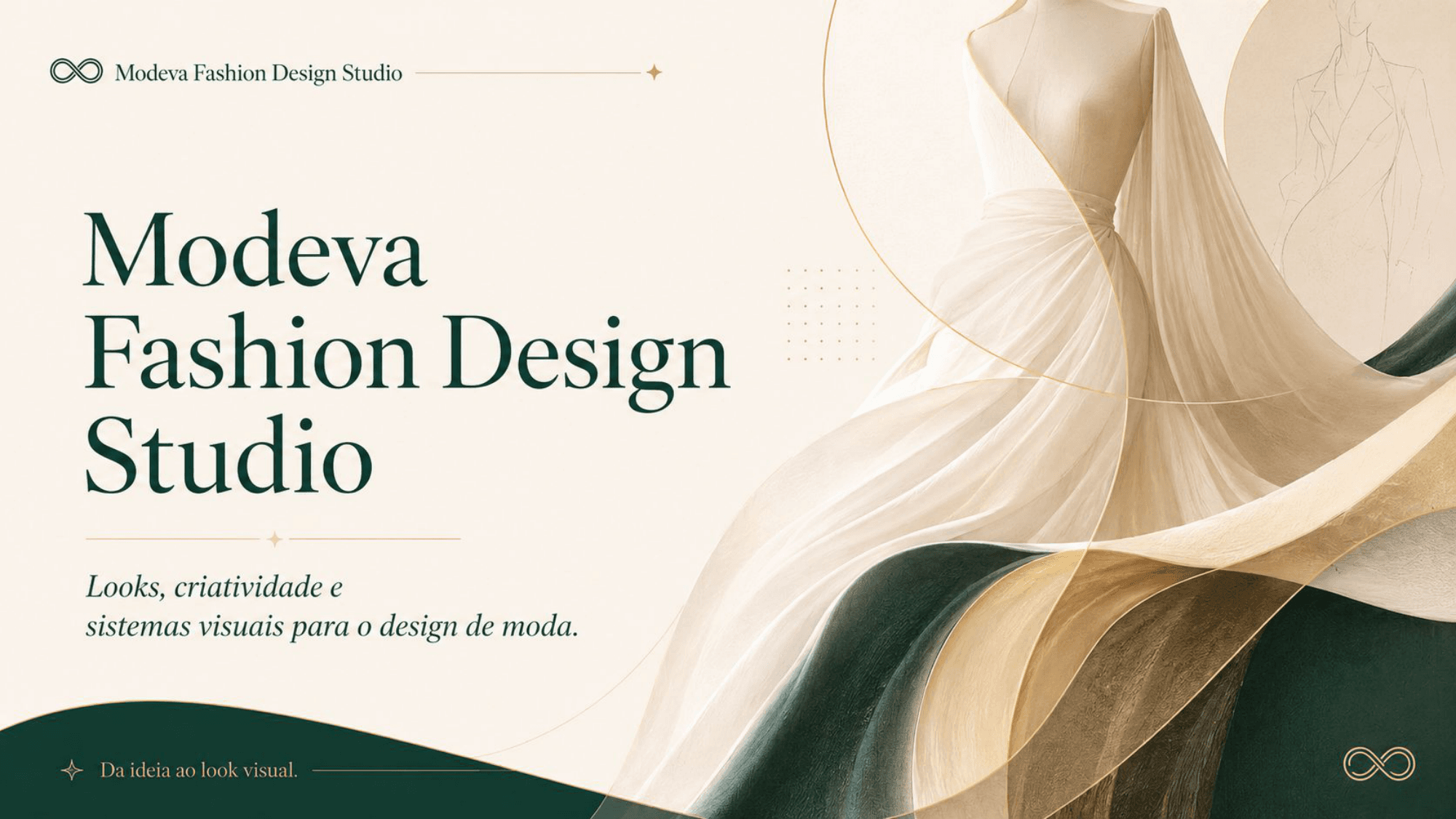
The fashion industry has always been a tension between art and commerce. Designers dream in silhouettes and textures; merchandisers count in margins and weeks. For decades, the compromise was accepted as immutable — creativity takes time, and time costs money.
The Old Paradigm
A typical collection cycle might look like this: twelve weeks of trend research, six weeks of sketching, eight weeks of sampling, four weeks of revisions, and then — if you're lucky — production. That's thirty weeks for a single season. In a world where TikTok trends emerge and dissolve in seventy-two hours, this timeline is not just slow — it's existential.
Enter Generative Design
AI doesn't replace the designer's eye. It amplifies it. At Modeva, we've seen studios compress six weeks of sampling into ten days by using generative models to pre-visualise fabrics, silhouettes, and colourways before a single physical sample is cut.
The magic happens not in the generation itself, but in the iteration loop. A designer can explore two hundred variants of a sleeve treatment in an afternoon. The AI learns preferences from approvals and rejections, narrowing the exploration space with every interaction. What emerges is not machine creativity — it's human creativity with machine acceleration.
Material Intelligence
Perhaps the most underappreciated application of AI in fashion is material analysis. By training models on fibre composition, weave patterns, and performance data, we can now predict how a fabric will drape, stretch, and age — all from a digital twin. This means fewer physical samples, less waste, and faster supplier negotiations grounded in data rather than guesswork.
What This Means for Studios
The studios winning in 2026 are not the ones with the biggest teams — they're the ones with the tightest feedback loops. AI is the substrate that makes tight loops possible. It turns the design studio from a sequential pipeline into a parallel playground, where fabric selection, silhouette exploration, and commercial forecasting happen simultaneously rather than sequentially.
“The question is no longer whether AI belongs in fashion. The question is whether your competitors are already using it.”
Looking Ahead
We believe the next frontier is not generative images — it's generative systems. AI that doesn't just produce a dress, but produces the entire supply chain plan: fabric orders, dye schedules, cut plans, and delivery timelines, all optimised for carbon footprint and margin. That's the future Modeva is building toward.
Want to see AI design in action?
Explore Fashion Studio